
How do you reconcile Korean 3PL inventory with Amazon FBA?
Count each SKU in single units in every place it can sit: the Korean 3PL, the freight leg, any US warehouse, FBA inbound and FBA on hand. Tie each count to the document that moved it on, and use Amazon's Inventory Ledger for FBA. Check weekly, daily while a shipment is receiving, and raise gaps before the claim window closes.
- One SKU map: 3PL code, Amazon SKU, FNSKU, units per case
- Korean 3PL dispatch list per FBA shipment ID
- Forwarder cargo receipt with carton count
- Carrier proof of delivery per shipment
- Inventory Ledger, weekly summary view
- Manage FBA Inventory: inbound, researching, reserved
- Reimbursements report, monthly
- A dated log of every manual adjustment
A brand that ships from Korea owns the same units in up to five places at once. Each place keeps its own count, and none of them is wrong on its own terms. Reconciliation proves the counts add up to the units you actually own, and finds the ones that don't.
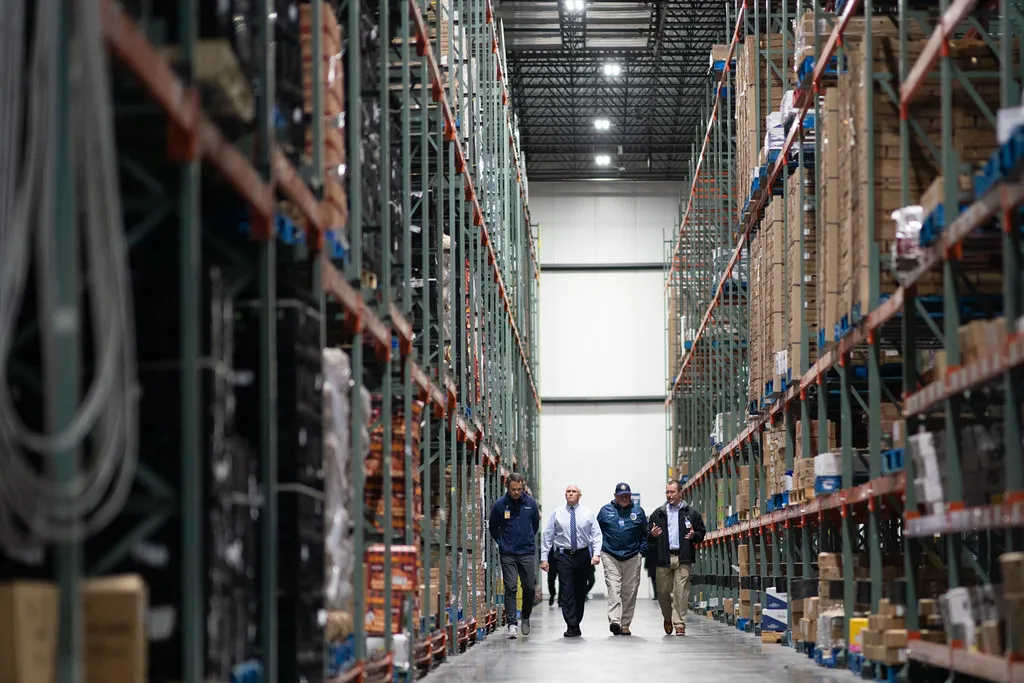
What are you actually reconciling?
Each location has one number you trust and one document that moves units to the next location.
| Location | Read the count from | Units leave by |
|---|---|---|
| Korean 3PL | Daily stock export | Dispatch per shipment ID |
| Freight leg | Cargo receipt, bill of lading | Carrier proof of delivery |
| US warehouse | Its inventory report | Outbound order to FBA |
| FBA inbound | Manage FBA Inventory, shipment page | Received at close |
| FBA on hand | Inventory Ledger | Orders, removals, losses |
FBA on hand also has an unfulfillable bucket. The whole chain answers one question: units owned this week should equal last week, plus production received, minus everything sold or written off. If that fails, one of these hand-offs is where the units went.
Which Amazon reports should you use?
Amazon has renamed and merged its inventory reports more than once, so many guides still point to reports that no longer exist. As of November 2026, these five matter.

| Report | Tells you | Pull it |
|---|---|---|
| Inventory Ledger, summary | Balances and movements per SKU | Weekly, plus month end |
| Inventory Ledger, detailed | Each event, last 18 months | When a line looks wrong |
| Manage FBA Inventory | Inbound, reserved, researching | Daily while shipment open |
| Shipment page, per ID | Shipped vs received; reconcile | At delivery and close |
| Reimbursements | What Amazon paid back, why | Monthly |
The ledger replaced Inventory Reconciliation, Inventory Adjustments and Received Inventory, among others. Its summary view reads like a bank statement: starting balance plus receipts, orders, returns, adjustments and removals should equal the ending balance.
- 2023-01-31
Ledger replaces six reports
- 2025-03
Reimbursed at manufacturing cost
- 2025-10-15
60-day loss claim window
What does the reconciliation table look like?
Take one SKU: a rice toner packed 24 to a case, shipped by ocean to FBA. The numbers are illustrative.
The carrier delivered all 50 cartons, so the gap sits with Amazon's receiving, not the forwarder. One missing case usually means a misread carton label or units received under another SKU, which is the first thing to ask about.
On-hand stock for the same SKU is checked against the ledger's monthly summary.
- 1Starting balance
- 2,340
- Receipts
- + 1,176
- 2Customer shipments
- − 1,610
- Customer returns
- + 22
- 3Adjustments
- − 4 (5 lost, 1 found)
- 4Ending balance
- 1,924
- 1Last month's ending balance
- 2Your sales record says 1,640
- 3Lost units start the 60-day clock
- 4The figure your books use
That 30-unit difference in customer shipments is what you chase in the detailed view.
How do you run it every week?
- 01Fix the SKU map
Single units only
- 02Pull 3PL dispatches
By shipment ID
- 03Follow each shipment
Where the count changes
- 04Run the ledger check
- 05Total the chain
- 06Open gaps with dates
- Fix the unit and the map firstOne SKU map: 3PL item code, Amazon SKU, FNSKU and units per case or set. Convert every count to single units through it and nothing else.
- Pull the Korean 3PL dispatchesEvery unit that left since last week, grouped by FBA shipment ID or US warehouse order.
- Follow each open shipment by IDCompare dispatched, booked with the forwarder, delivered and received. Mark where the count first changes.
- Run the ledger checkIn the weekly summary, starting balance plus movements must equal the ending balance, and customer shipments should match your own sales record.
- Total the chainAdd the Korean 3PL, freight, US warehouse, FBA inbound and FBA on hand, and compare with last week plus production received minus sales and write-offs.
- Open what you found, with a dateEvery gap gets an owner, a counterparty (3PL, forwarder or Amazon) and the date its claim window closes.
When should you count?
A weekly check is the base. Some moments need their own count because the evidence disappears after them.

- Korean 3PL dispatch
Units, cartons, label photos
- Forwarder hand-off
Cargo receipt: cartons, weight
- Delivery to FBA
Carrier proof of delivery
- Shipment closes
Shipped vs received per SKU
- Month end
Ledger ending balance
The packing list is your proof of what left. Splits and repacks happen at consolidation, Amazon asks for proof of delivery when a shipment is short, and claims can only be raised once the shipment is closed.
Why don't the numbers match?
Most gaps are timing or naming, not theft. Work through these before you raise a claim.
Proof of ownership + delivery
| Cause | How it shows up | Do this |
|---|---|---|
| Still receiving | Days in "receiving" | Wait for close |
| Case or set math | Off by a case multiple | Recheck conversion table |
| Label or FNSKU mix-up | Other SKU or "Amazon.Found" | Match ASIN, ask correction |
| Split shipment | Several IDs, several sites | Reconcile each, then add |
| Reserved stock | Fulfillable below on hand | Check orders, transfers, processing |
| Researching | Gone, no loss record | Wait, then find lost/found |
| Forwarder repack | Carton count changes en route | Get consolidation record |
| Lost or damaged | Ledger adjustment: lost, damaged | Check Reimbursements first |
Since October 15, 2025, units lost or damaged inside Amazon's network must be claimed within 60 days of the reported loss. Inbound shipment windows are shown on each shipment's page in Seller Central. Since March 2025, Amazon reimburses at manufacturing cost, so keep your cost per unit current.
What should you send when a gap is real?
A short shipment goes to Amazon only after it shows Closed. Send proof of ownership, such as the supplier invoice, and proof of delivery with the carton count, in PDF, JPG, PNG or TIFF. The step-by-step is in FBA received fewer units than we shipped.
If cartons were already missing at delivery, the claim belongs with the carrier or forwarder, not Amazon. That is why the carton count at each hand-off matters more than any single report.
Where Pixell fits
Pixell Agent runs this check every day for brands shipping from Korea to Amazon. It keeps the SKU map, follows each shipment ID from the Korean 3PL to FBA, and brings a person only the gaps, with the evidence attached. Pricing starts at $4,000 a month.
- Dispatched, Korean 3PL
- 1,200 (50 cases)
- Delivered by carrier
- 50 cartons
- Received, closed
- 1,176
- 1Gap
- 24 units
- Sits with
- Amazon receiving
- 2Evidence
- Dispatch list, proof of delivery
- 3Proposal
- Ask Amazon to check labels
- 1Exactly one case
- 2Attached to the gap
- 3Misread label or another SKU
Questions
Which Amazon report replaced the Inventory Reconciliation report?
The Inventory Ledger. On January 31, 2023 it replaced six reports, including Inventory Reconciliation, Inventory Adjustments and Received Inventory. Use the summary view for balances and the detailed view for individual events.
How often should I reconcile FBA inventory against my 3PL?
Weekly for the whole chain, daily for any FBA shipment that is in receiving, and once at month end with the ledger's ending balance. Lost or damaged claims have a 60-day window, so a monthly-only check leaves little room.
Does stock in transit to Amazon still count as my inventory?
Yes. Units on a ship, in a US warehouse or in FBA inbound are still yours, so they belong in the count. Track them by shipment ID until Amazon has received them.
What do reserved and researching mean in FBA?
Reserved units are on hand but tied to a customer order, a transfer between fulfillment centers or processing. Researching units are ones Amazon is still looking for. Neither is sellable today, so plan replenishment from fulfillable stock.
Should I count multipacks and sets as one unit?
Reconcile in single units. Keep one table that says how many single units each case, set or multipack holds, and convert every source through it.
How long do I have to raise a missing inbound shipment?
Amazon shows the window on each shipment's reconcile page in Seller Central, and the rules have changed several times. Check it the day receiving ends rather than relying on a number from a blog.
Tell us what you'd hand off first
Thirty minutes. We map it to rules and show you what Pixell Agent would own.
Book an operations review